

A Toyota key fob is an essential component of modern vehicles, providing convenience and seamless access to your car. However, like all battery-powered devices, the key fob’s battery will eventually need replacement.
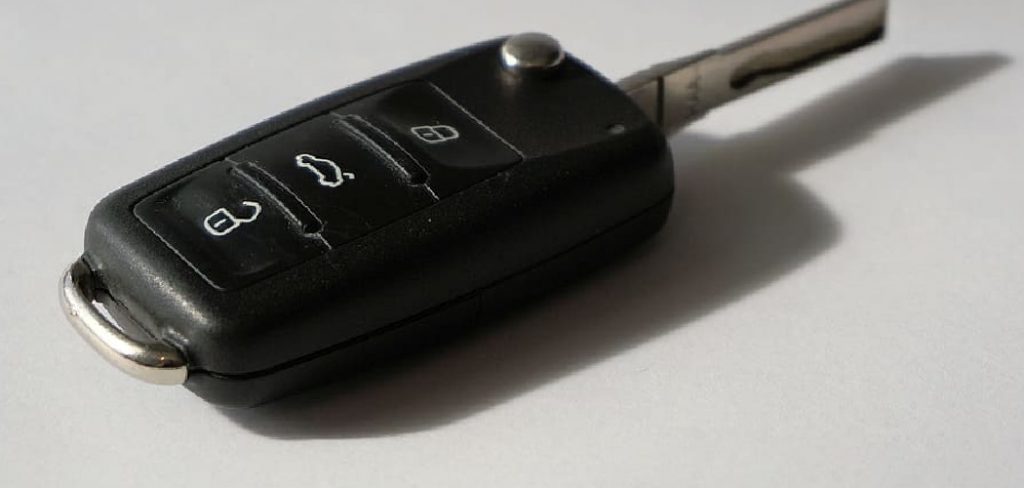
Ensuring that your key fob is functioning properly is crucial to avoid situations where you’re unable to lock, unlock, or start your vehicle. This guide will walk you through how to test a toyota key fob battery in your Toyota key fob to determine if it requires replacement.
Common Signs of a Weak or Dead Key Fob Battery
It’s important to recognize the signs of a weak or dead battery in your Toyota key fob to address the issue promptly. Some common indicators include:
- Reduced Range: If you notice that you need to be closer to your vehicle than usual for the key fob to work, this could be a sign the battery is losing power.
- Intermittent Functionality: A weak battery may cause the fob to work sporadically, making it unreliable.
- No Response: Pressing the buttons with no response from your vehicle is a clear sign that the battery may be completely dead.
- Dim or No LED Light: Many key fobs have an LED light that illuminates when buttons are pressed. If the light is faint or doesn’t light up at all, the battery is likely depleted.
Recognizing these signs early can help you avoid potential inconvenience and ensure that your key fob operates smoothly.
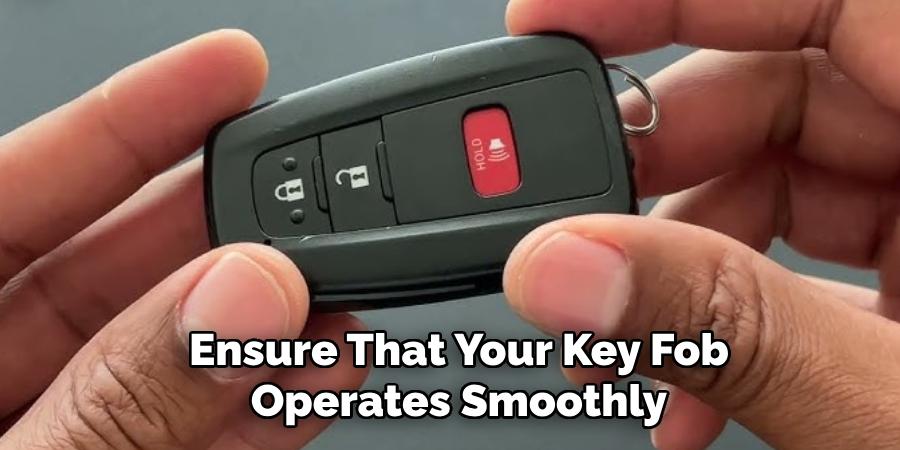
10 Methods How to Test a Toyota Key Fob Battery
1. Visual Inspection of the Key Fob
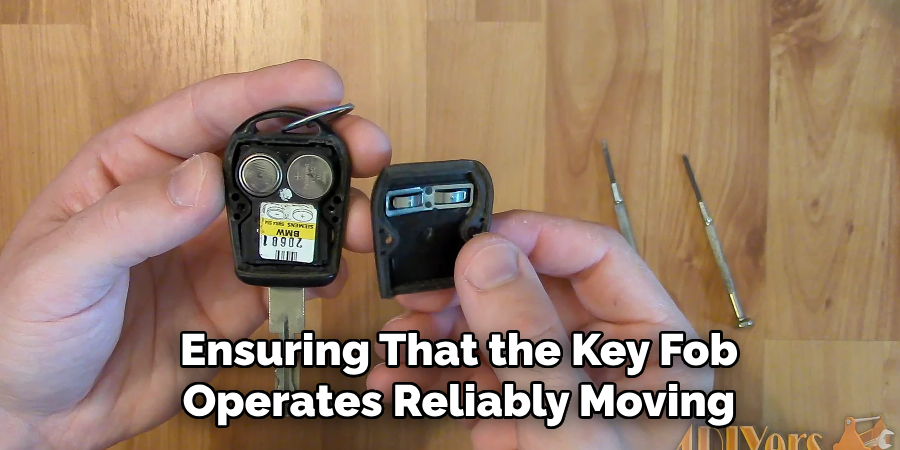
The first step in testing your Toyota key fob’s battery is to perform a basic visual inspection. Start by checking the battery compartment of the key fob. Most Toyota key fobs have a small slot where you can open the fob and inspect the battery. Look for any obvious signs of corrosion, leakage, or damage.
If you see any corrosion on the battery contacts or the terminals, it might be causing poor battery performance. While this method doesn’t give an exact test of the battery’s charge, it can reveal problems that affect the key fob’s performance, such as battery leakage or poor contact.
2. Test the Key Fob’s Functionality
One of the simplest ways to test the Toyota key fob’s battery is to check if it’s still performing its basic functions. Try pressing the lock/unlock button to see if the fob activates the vehicle’s locks. If the range is significantly shorter than usual or if the fob doesn’t respond, it’s likely that the battery is weak.
Testing multiple functions, like the panic button or trunk release, can provide a better idea of the battery’s status. If none of the buttons work or the key fob is unresponsive, the battery is likely dead or very low.
3. Use a Digital Multimeter to Measure the Battery Voltage
A more accurate method to test your Toyota key fob battery is by using a digital multimeter to measure its voltage. Set the multimeter to measure DC voltage and place the positive (red) probe on the positive terminal of the battery, and the negative (black) probe on the negative terminal.
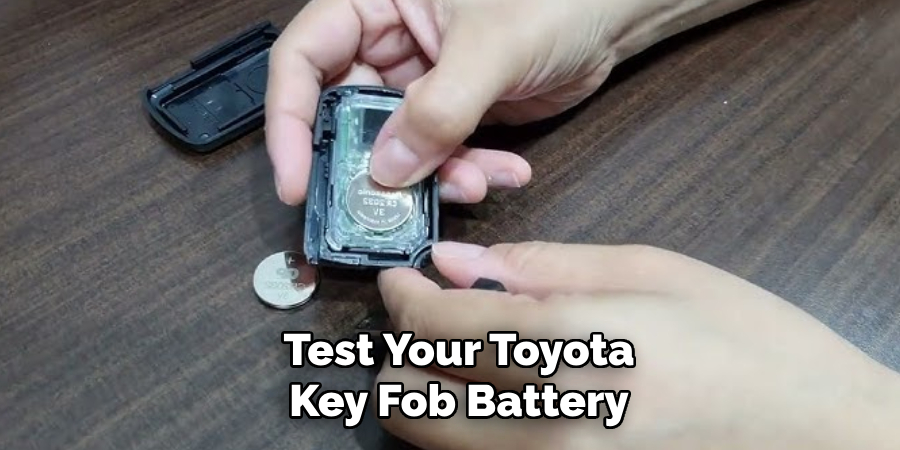
A typical key fob battery will be 3V (often a CR2032 or similar coin cell battery). If the reading on the multimeter is significantly lower than 3V (for example, around 2.5V or lower), it’s time to replace the battery. This method provides a precise measurement of the battery’s remaining charge.
4. Test the Key Fob Range
If you’re experiencing a decrease in the range of your key fob, it could be a sign that the battery is weakening. To test the range, stand at a distance from your Toyota vehicle and try using the key fob to lock or unlock the car. Start at a range you usually use and progressively move further away.
If the key fob stops working or has a significantly reduced range, this is a strong indication that the battery is low and needs replacement. Keep in mind that environmental factors, like interference from nearby electronic devices, can also affect the range, but a short range is often a battery issue.
5. Use a Key Fob Tester Device
Some automotive service centers or locksmiths have key fob tester devices that can help you quickly determine the status of your key fob’s battery. These testers simulate a real-world environment to see if the fob is transmitting a signal.
You can usually take your key fob to a local locksmith or auto parts store that offers this service for a quick and easy test. The tester will either confirm that the fob is transmitting a signal properly or indicate a weak or dead battery. This is a reliable method if you don’t want to perform more complex tests on your own.
6. Perform a Reset of the Key Fob
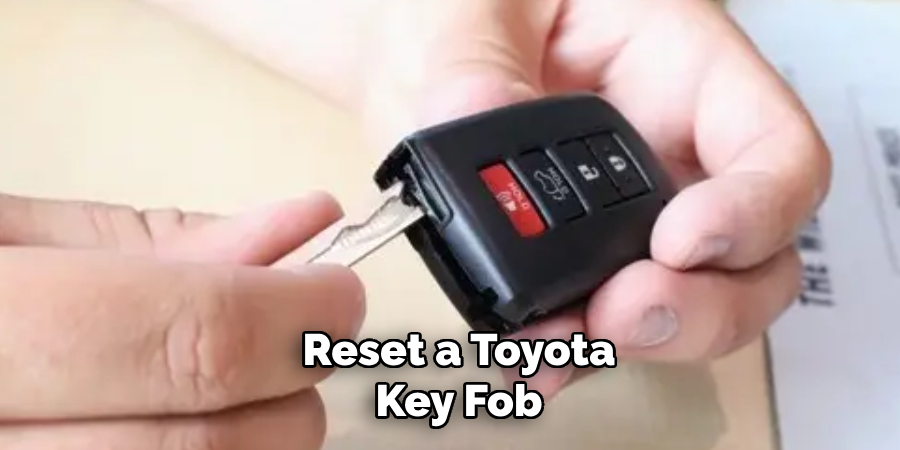
Sometimes, a key fob may become unresponsive not because of a dead battery, but due to a temporary malfunction or communication issue. Performing a reset of the key fob can sometimes restore functionality and give you an idea of whether the issue lies with the battery or the fob itself.
To reset a Toyota key fob, you can remove the battery, wait for about 10 seconds, and then reinsert it. Once the battery is back in place, test the key fob to see if it responds to button presses. If the reset doesn’t work, the battery is likely the problem, and it may need replacing.
7. Check for External Interference
External interference can sometimes affect the functionality of a Toyota key fob, especially in areas with a lot of wireless signals. Devices like Wi-Fi routers, cell phones, and other wireless electronics can create interference that disrupts the signal between your key fob and the vehicle.
To test if interference is the issue, try using the key fob in a different location, preferably somewhere with minimal electronic devices. If the key fob works properly in a different location, this suggests that external interference is causing the problem, rather than a dead battery.
8. Check the Key Fob’s Battery Type
Different Toyota key fobs may use different types of batteries, so it’s important to know what kind of battery your fob uses. Most Toyota key fobs use CR2032 or CR2025 batteries, which are widely available. Check the back of your key fob to identify the battery type or consult the owner’s manual.
Some fobs have a small slot or compartment that can be pried open to view the battery without removing it entirely. Knowing the battery type is essential for replacing the battery properly, and it ensures that you purchase the right replacement.
9. Inspect for Physical Damage to the Key Fob
Another way to test your Toyota key fob’s battery is by inspecting the fob itself for physical damage. Over time, the key fob may be dropped, exposed to moisture, or subjected to other environmental factors that can affect its functionality.
Check for any cracks, water damage, or signs of wear on the fob. If the key fob is physically damaged, the internal components, including the battery, may no longer function properly. In this case, replacing the fob or repairing the damage may be necessary in addition to replacing the battery.
10. Consult a Professional Technician
If you’ve tried the above methods and are still unsure about the status of your key fob’s battery, or if you’re unable to replace the battery on your own, consider consulting a professional technician. Many Toyota dealerships and automotive service centers offer key fob diagnostics and battery replacement services.
A professional can quickly identify if the battery is the issue and replace it if necessary. They may also be able to offer advice on any additional issues with the key fob that could be affecting its performance, such as internal malfunctions or signal issues.
When to Contact a Professional
While many key fob issues can be resolved with simple at-home troubleshooting, there are situations where professional assistance is necessary. If your key fob remains unresponsive even after replacing the battery, it’s a strong indication of a more complex issue, such as a malfunction in the key fob’s internal circuitry or a programming problem.
Additionally, if your key fob experiences physical damage, like a cracked casing or water intrusion, a professional may need to repair or replace the device. For fobs that require specialized reprogramming to sync with your Toyota vehicle, visiting a dealership or an authorized locksmith is essential.
Professionals can also help diagnose unusual problems, such as persistent signal interference or issues with your vehicle’s receiver system, ensuring that the key fob operates reliably moving forward.
Conclusion
Testing the battery in your Toyota key fob is an essential step in maintaining the functionality of your car’s remote system. Whether you’re using a multimeter, testing the range, or seeking professional assistance, there are numerous ways to determine whether the battery needs replacing.
Regular maintenance of the key fob and its battery can help prevent frustrating situations, such as being locked out of your car or unable to start it remotely. By performing these simple tests, you can ensure that your key fob continues

About
Safety Fic is a distinguished figure in the world of Diy design, with a decade of expertise creating innovative and sustainable Diy solutions. His professional focus lies in merging traditional craftsmanship with modern manufacturing techniques, fostering designs that are both practical and environmentally conscious. As the author of diy, Safety Fic delves into the art and science of Safety Fic-making, inspiring artisans and industry professionals alike.
Education RMIT University
(Melbourne, Australia) Associate Degree in Design (Safety Fic) Focus on sustainable design, industry-driven projects, and practical craftsmanship. Gained hands-on experience with traditional and digital manufacturing tools, such as CAD and CNC software.
Nottingham Trent University
(United Kingdom) Bachelor’s in diyfastly.com and Product Design (Honors) Specialized in product design with a focus on blending creativity with production techniques. Participated in industry projects, working with companies like John Lewis and Vitsoe to gain real-world insights.
Publications and Impact
In diy, Safety Fic his insights on indoor design processes, materials, and strategies for efficient production. His writing bridges the gap between artisan knowledge and modern industry needs, making it a must-read for both budding designers and seasoned professionals.